Fashion is a way of life; an attitude that transcends through your ensemble displaying your own originality. It allows people to express their feelings and make statements through their clothes and accessories. For instance, wearing a sexy outfit may illicit an individual to feel more sexy and playful. The classicism and elegance of fashion is evolving, allowing it to take on a touch of originality, fantasy, and sensuality not only in the fabrics, but in designs and styles. This Contemporary and relaxed attitude creates a look by associating colors and designs which can transform jeans, shirts, purses or even dresses in a unique and glamorous collaboration. Imagery is a new concept used by fashion designers to enhance these creative possibilities.
Fashion has become a pleasure rather than an obligation. Designers work hard to be the leaders in new trends and to come up with the next legendary accessory. They experiment with embellishments, colors and regardless of styles, create the perfect elegance making fashion the perfect weapon of seduction. The current trend is colorful, making the solid color purse no longer a stylish commodity. In today's world, a frame is not limited to the metal object that sits on your desk and holds a picture, but rather an item that is carried with you anywhere you may go.
The fact is that history seemingly repeats itself.
Fashion started to emphasize conformity in the way people should look. Women were sold on a certain body shape that would best fit the latest fashions and that shape was a thin waist with defined hips and a larger but very defined and shapely bust. Compared to today's standards that feature extremely thin and very tall models, that image might seem more attainable and more natural for most women, but it still placed a lot of pressure on women and girls during the decade to conform to an idealized beauty standard. Corsets, controllers and bustiere tops were standard beauty fare and latex and nylon slimmers were heavily marketed towards women. Bras and bust paddings that helped achieve that defined and almost cone-like shape for busts were also in abundance. The choice and variety of clothing made in "stout" sizes and for older women also started to fade into the background.
Conformity in Style
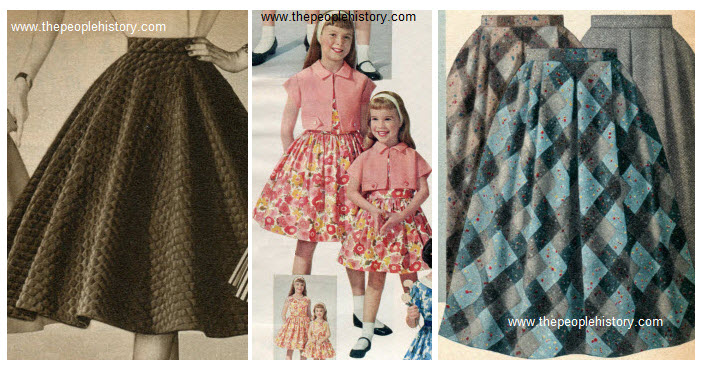
During the 1950's, style was used to set a common standard of look. This meant that not many choices of dramatically different styles were available throughout the decade. A lot of clothing was similar in shape and silhouette but varied in color, pattern or type of fabric. There was a prevalent expectation to match and keep up with neighbors and friends and to impress others with Matching outfits for whole families were popular, especially during the holidays or during vacations. Matching dresses for mothers and daughters as well as matching sister dresses were also some of the most remembered fashions of the decade.
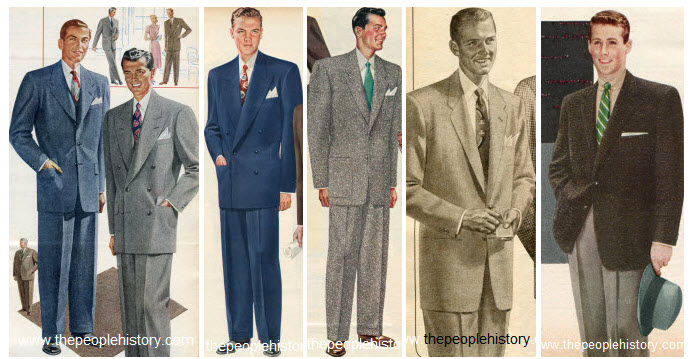
For men, fashions changed very little throughout the decade. Choices were suits, sport coats, slacks, sweaters, or casual wear all in similar fabrics and styles. Occasionally bolder patterns might emerge for casual wear, but business clothing remained largely unchanged during the fifties. Work clothing for laborers was usually in the style of the military, because a majority of the men at the time had served in the armed forces or were still a part of the military.
The Rise of Teenage Culture
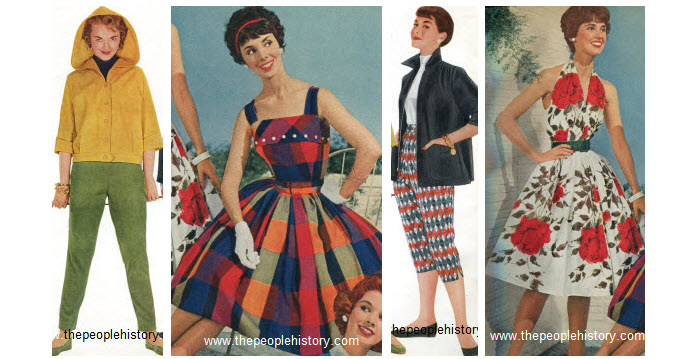
Around the middle of the decade a separation between child and adult styles began and the gap was filled by teenage clothing. Resulting from the economic boom and baby boom coinciding, teenage style, culture, and consumerism became a major part of society for the first time in recent history. Teens started to get disposable income from parents and part-time jobs, they also started to gain more leisure time and that combination meant more shopping. Around 1955, we start to see that some of the biggest trends are targeted towards teenagers. Suddenly, whole departments and catalog sections are devoted to (mainly female) teenagers and young adults. At this point, teenage culture and clothing also became a larger part of television, movies and music.
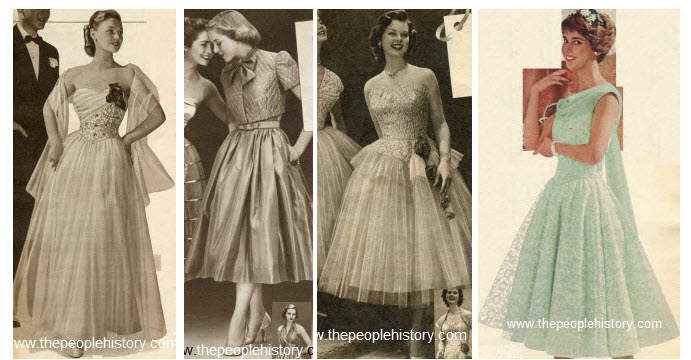
With greater emphasis placed on one's teenage years, many formal fashions were also marketed to this age group as school dances and proms became an important part of the decade and have since been an integral part of teen life. While many of these formal fashions were available in both junior and adult sizes, judging by the styling and descriptions, these dresses were definitely meant to be worn while dancing in the decorated high school gym accompanied by your beau.
 The Beginnings of Change
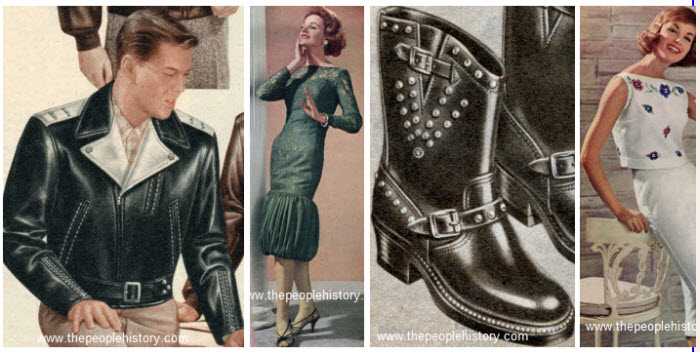
At the end of the 1950's, we start to see less conservative styles appear. Sexier silhouettes with tighter skirts, shirts and dresses start to show up for women. Rebellious looks for men also emerge with leather motorcycle jackets, studded boots, and bolder patterned shirts and sweaters becoming popular at the latter end of the decade. Girls and women start to get more clothing options in terms of pants and shorts with pedal pushers, Bermuda shorts, and tapered leggings featuring prominently in style trends.
Fashions from the fifties greatly showcased the mood of the decade and emphasized consumerism and conformity. Going into the 1960's, fashions started to reflect the upcoming diversity and individuality that would become the main focus behind the fashion revolution during the next decade.


nice post bimala
ReplyDelete